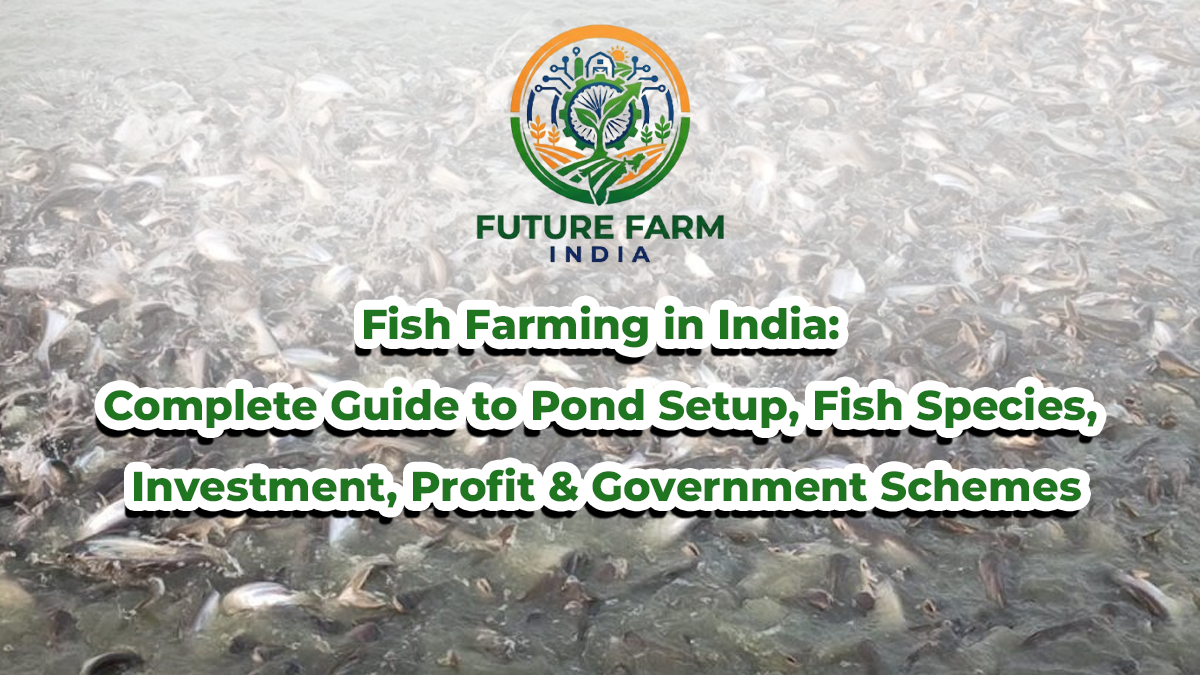
Fish farming, also popular among people as “aquaculture,” has emerged as one of India’s most rapidly expanding agricultural sectors. With rising demand for fish as a healthy protein source, many farmers and modern investors are turning to this fish farming business to build a rock-solid source of livelihood.
India has rich water resources like ponds, rivers, lakes, and coastal areas, which make fish farming ideal for growing businesses. In this complete guide you will read everything about fish farming that includes pond setup, fish species, cost, profit, and government support.
What is Fish Farming?
Fish farming is farming on land, but instead of growing crops or raising animals, you are raising fish in a controlled environment like ponds, tanks, or cages for commercial purposes. Fish farming can be done on a small scale in villages or on a large commercial level.
Why is Fish Farming Profitable in India?
Fish farming is highly profitable in India due to this massive domestic demand growth for cheap and high protein; farmers can convert low-cost or marginal land into water storage ponds or fish ponds, making the initial investment affordable. Additionally, the Indian government started promoting it by giving subsidies, providing low investment bank loans, and also providing modern training through government schemes and making it a low-risk business, which significantly boosts their business profits. With proper planning, management, and government support, fish farming can provide regular income to the farmers throughout the year.
Types of fish farming in India:
- Freshwater fish farming
- Done in ponds, tanks, and lakes.
- This farming is very common in India.
- Marine fish farming
- Done in seawater.
- Mostly in coastal areas
- Integrated fish farming
- Fish farming is combined with agriculture and livestock.
- For example, fish + poultry or fish + rice farming.
Best Fish Species for Farming in India
Selecting the right species according to your ponds for farming is a very important task.
Popular Freshwater Fish:
- Rohu – Fast growth and high demand
- Catla – Large size and good market value
- Mrigal – Common in Indian ponds
- Tilapia – Fast-growing and easy to maintain
- Pangasius – High production in less time
Things every farmer should keep in mind before selection:
- Choose the species based on your local demand.
- Ensure the availability of quality and quantity of fish-seed.
- Select disease-resistant varieties.
Pond Setup for Fish Farming
A proper pond setup is a vital part of successful fish farming.
Pond Requirement:
Usually the size of the pond goes from small to large (0.1 acre to 1+ acre), the depth is 1-2 meters, the water is clean and pollution-free, and there is full sunlight exposure.
Steps for Pond Preparation:
- Cleaning the Pond
- Removing the weeds, unwanted fish, and mud.
- Liming
- Add lime to maintain pH balance.
- Fertilization
- Use organic manure to increase the natural food.
- Water Filling
- Fill the clean water and try to maintain the water level.
- Stocking Fish Seeds
- Add the fish seeds in the proper quantity.
A well-prepared pond increases fish growth and the survival rate.
Feeding Management in Fish Farming –
Types of Feed:
- Supplementary feed
- Natural Food
- Commercial fish feed.
Tips for Feeding—
- Feed fish 1–2 times daily
- Do not overfeed
- Maintain water quality
- Use high-quality feed for faster growth
Feeding cost is a major expense, so proper management is required.
Investment in Fish Farming –
The cost of fish farming depends on the size of the pond and scale.
Example for a 1-acre pond:
- Pond construction: ₹50,000 – ₹150,000
- Fish seeds: ₹10,000 – ₹20,000
- Feed cost: ₹30,000 – ₹70,000
- Labor: ₹20,000 – ₹40,000
- Medicines & maintenance: ₹10,000 – ₹20,000
Total Investment:
₹1.2 lakh to ₹3 lakh (approx.)
You can reduce costs by using existing ponds.
Profit in Fish Farming
Fish farming can generate good profit if managed properly.
Example:
- Production: 2,000–4,000 kg fish per acre
- Selling price: ₹100–₹200 per kg
Total Income:
₹2 lakh to ₹6 lakh per cycle
Net Profit:
₹1 lakh to ₹3 lakh (approx.)
Profit depends on fish type, feeding, and market price.
A simple plan for running a successful fish farm would help more in the future.
Steps:
- Choose suitable land or pond
- Select profitable fish species
- Prepare pond properly
- Arrange quality feed
- Maintain water quality
- Monitor fish health
- Plan marketing and selling
First start with a small farm, gain experience, and then expand gradually.
Government Schemes for Fish Farming in India –
- Pradhan Mantri Matsya Sampada Yojana (PMMSY)
- Financial Support for Fish Farming
- Support for pond construction and equipment
- NABARD Subsidy
- Loans and subsidies for aquaculture
- Blue Revolution Scheme
- Promotes fish production and exports
- State Government Schemes
- Training and subsidies for farmers
Farmers can apply through fisheries departments or banks.
Challenges in Fish Farming
- Water pollution
- Disease outbreaks
- High feed cost
- Climate changes
- Market price fluctuations
Conclusion
Fish farming in India is a highly profitable and growing business. With increasing demand for fish and strong government support, it offers a great opportunity for farmers and entrepreneurs.
By choosing the right fish species, preparing the pond properly, managing feed and water quality, and using government schemes, you can achieve good profit from fish farming.
If you are planning to start a farming business, fish farming is a smart and sustainable option. Start with a small setup, learn the process, and expand step by step for long-term success.
Read More: नैपसैक स्प्रेयर कैसे काम करता है? किसानों के लिए पूरी गाइड