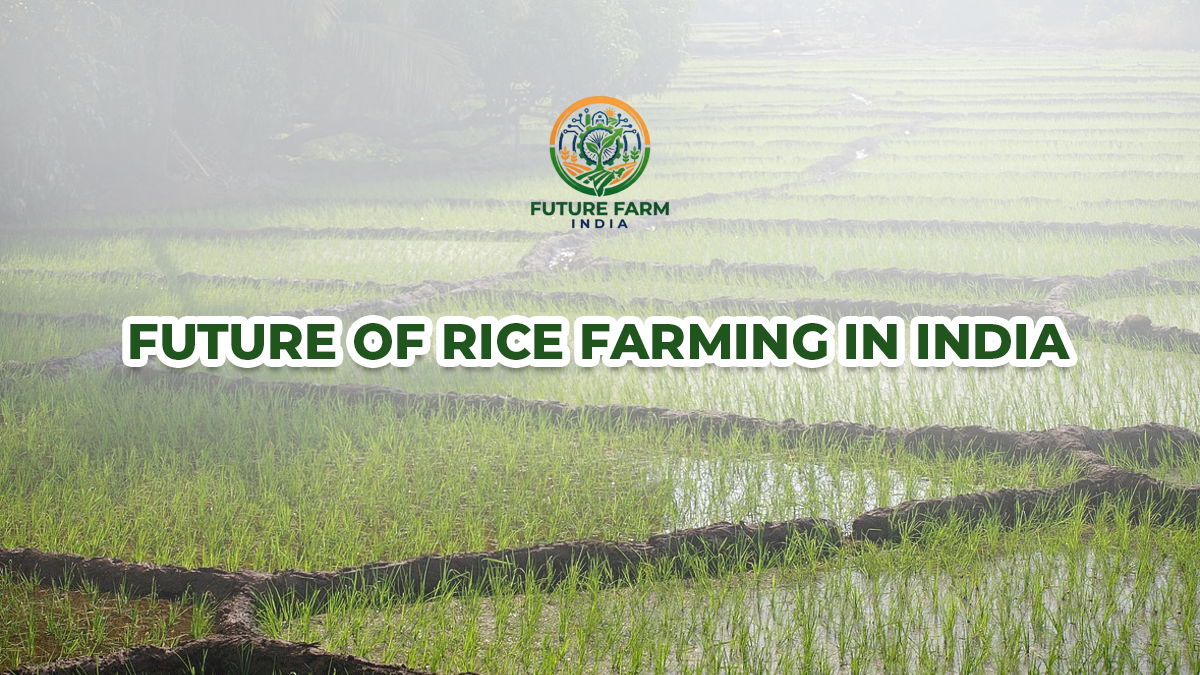
Rice is one of the most important primary foods in India. It gives food to millions of people daily and supports the livelihoods of many farmers. However, rice farming is now facing challenges like water shortage, climate change, rising costs, and reduction in soil fertility. To secure the future of farming and agriculture, farmers are now adopting new methods and technology.
Here’s a simple list of the future of rice farming in India:
- Use Climate-Adaptable Varieties
- The new varieties of rice are developed in a way that can tolerate floods, drought, and high temperatures.
- These seeds help farmers grow crops even in unpredictable weather conditions.
- This reduces the risk of crop failure.
- Water-Saving Techniques
- The traditional method of rice farming requires a lot of water.
- Farmers can use some different techniques to save the water, like direct-seeded rice.
- These techniques also improve farming productivity and reduce irrigation costs.
- Mechanization in farming
- Modern farming machines like seeders, transplanters, and harvesters are reducing manual labor.
- By shifting to modern mechanization tools, farmers save their time and increase efficiency.
- It is especially useful where labor is expensive or unavailable.
- Use of Digital Technology
- Farmers are using mobile apps for weather updates, crop advice, and market prices.
- AI and satellite-based tools help to monitor crop health.
- Digital farming makes decision-making easier and more accurate.
- Improved Yield and Quality
- Research and innovation are helping increase rice productivity.
- Better seeds and farming activities lead to higher yields.
- Quality improvement also helps farmers to get better prices in the market.
- Better Market Opportunities
- Demand for rice is increasing both in India and globally.
- Export opportunities are growing, especially for premium varieties like basmati.
- Opportunities for earning more money are increasing with better marketing and storage facilities.
- Adaptation of Climate Change
- Farmers are shifting their sowing dates and irrigation practices based on weather patterns.
- Climate-smart farming techniques are becoming more popular.
- This helps reduce losses due to extreme weather.
- Reduction in Production Costs
- Efficient use of water, fertilizers, and labor reduces overall costs.
- Technology helps farmers avoid unnecessary expenses.
- This increases profit margins over time.
People also may ask –
- What is the future of the rice industry in India?
- What are the problems faced by rice farmers?
- What are the weaknesses of rice?
Conclusion
The future of rice farming in India looks promising with the adoption of modern technology. While challenges like climate change and water scarcity remain, innovative solutions are helping farmers overcome them.
By using improved seeds, water-saving methods, and digital tools, farmers can increase productivity and income. With the right support and awareness, rice farming will continue to play a vital role in India’s agriculture and food security.
In the coming years, smart and sustainable farming will shape the future of rice cultivation, ensuring better yields and a secure livelihood for farmers.
Read More : Digital Farming Apps: Are They Useful for Farmers?